
Climate Change is a health crisis. Its costs are unequal, and women often pay the price.
Heat, disasters, and climate risks don’t land equally. Gender shapes who carries the burden and how.
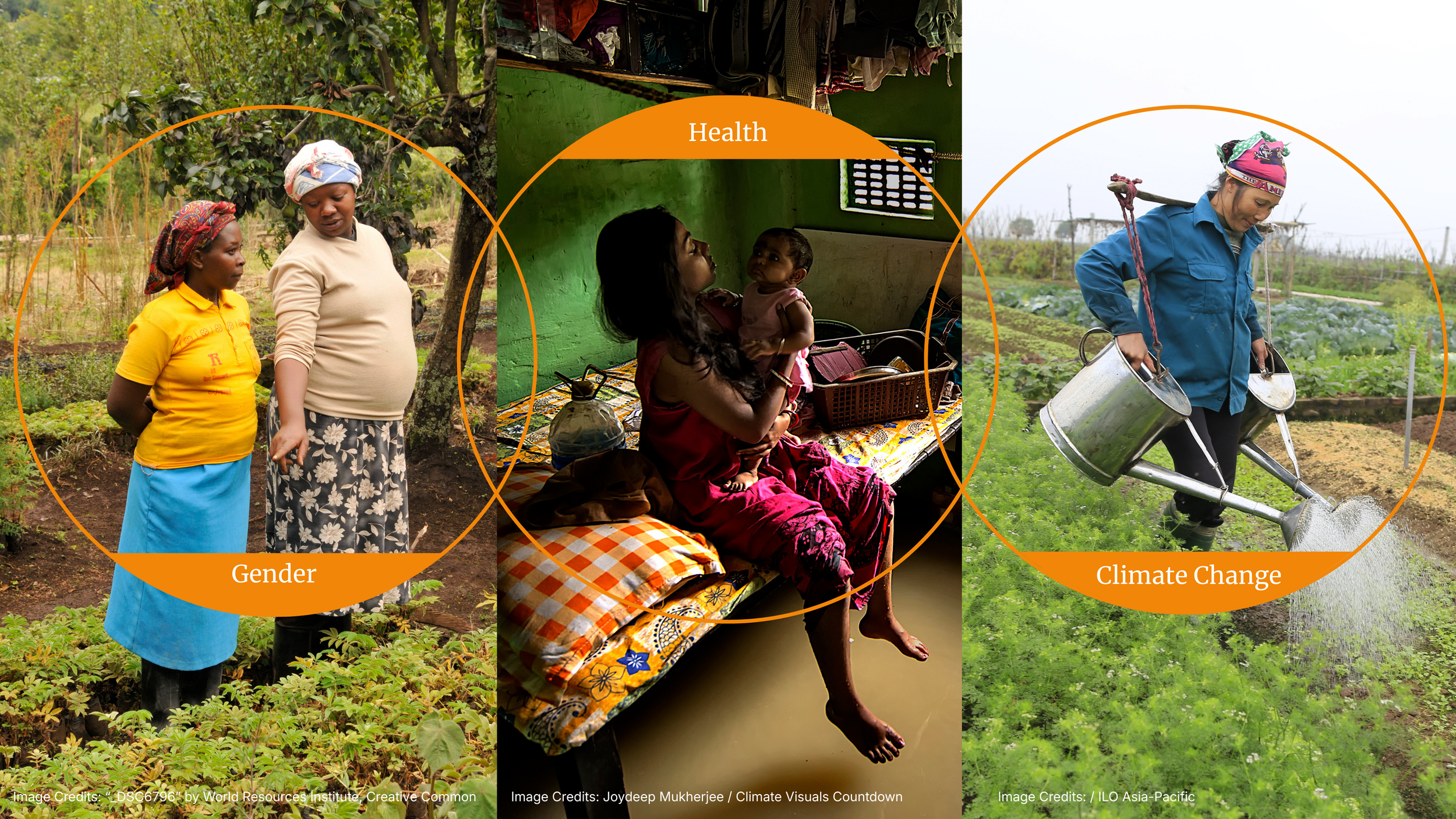
Climate change is often described in degrees, distant timelines, and parts per million. For people across the world, it shows up closer—in our health and bodies: in breath that gets shorter on polluted days, in pregnancies that become riskier as temperatures rise, in anxiety that does not lift after floodwaters recede.
The climate crisis is a health crisis. The impact is direct—heatwaves, storms, floods, wildfires. It is also indirect through food, water, livelihoods, and strained health systems. Much of the air pollution comes from burning fossil fuels, creating health risks long before a flood or heatwave hits. These impacts are unevenly distributed and getting worse each year.
Gender is one clear lens through which this inequity becomes visible. Climate change often hits women differently because of biological factors, including pregnancy, and social realities that shape exposure, access, and care.
Heat makes the pattern impossible to ignore
Extreme heat is an acute climate-linked health hazard. It lays bare the overlap between physiology and inequality.
Pregnancy makes this risk visible. Across a body of research, for every 1°C rise in temperature, the odds of preterm birth rise by around 5%, and stillbirth risk increases by around 5%. This is not a marginal shift. It is the difference between a safe pregnancy and an emergency, multiplied across hotter seasons and longer heatwaves.
Climate data often overlooks women’s daily exposure to heat. In many places, women are concentrated in informal work settings, often in unregulated outdoor environments or in poorly ventilated spaces, without heat protection, paid leave, or reliable access to water and cooling. Many women shoulder the tasks of cooking, caregiving for children and older relatives—often during the hottest times of the day, and in homes not designed for rising temperatures. Outside, they spend long hours collecting water, firewood or standing in queues, with little relief from the heat.
This is why climate harm isn’t only about the heat itself. It is the daily conditions that decide who can avoid it, and who can’t.
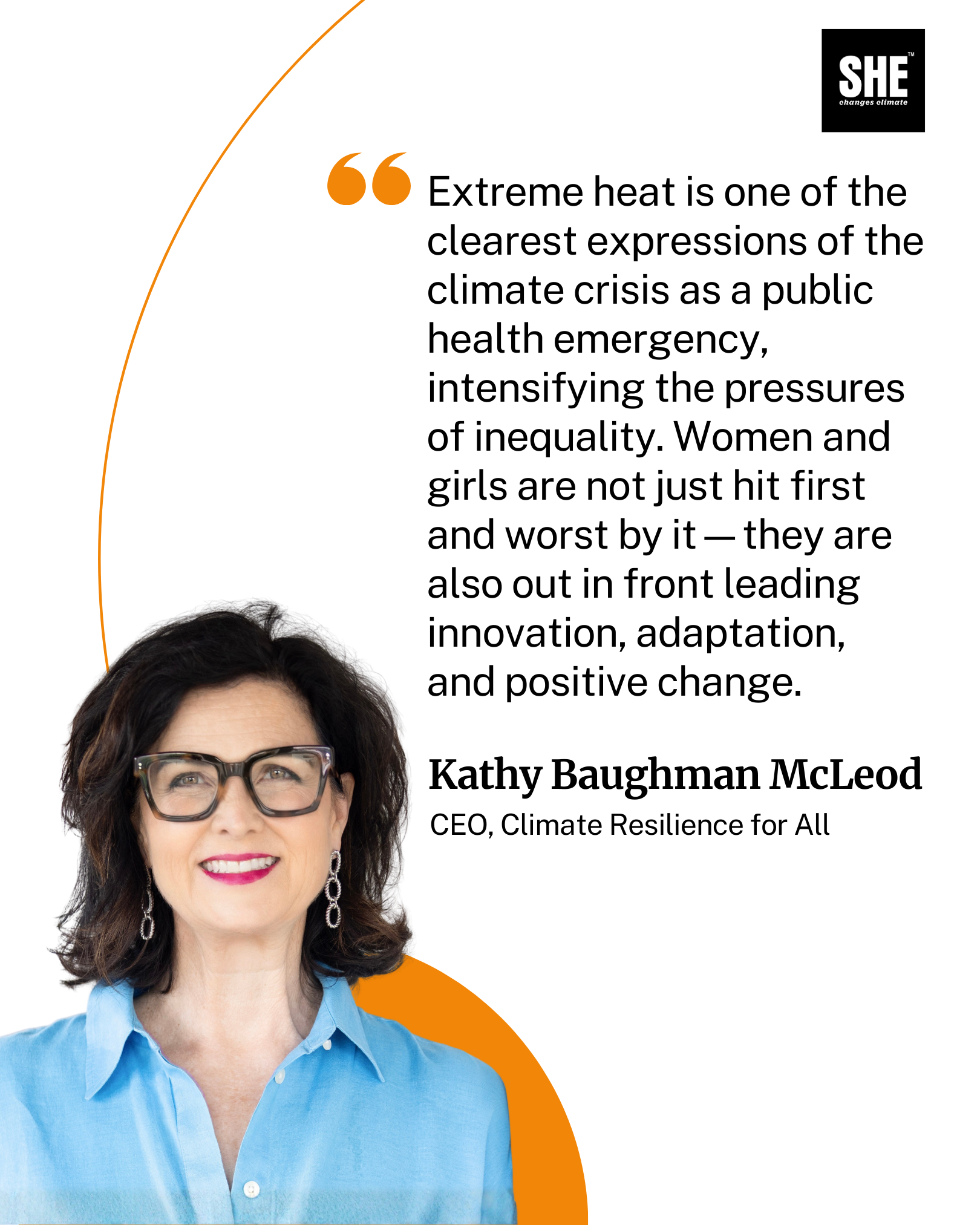
That final line matters. Too often, women appear in climate-health discussions as victims. The reality is women are first responders, community organisers, health workers, and innovators. Yet their lived experience is still not treated as core evidence in policy.
Food and livelihoods shape health
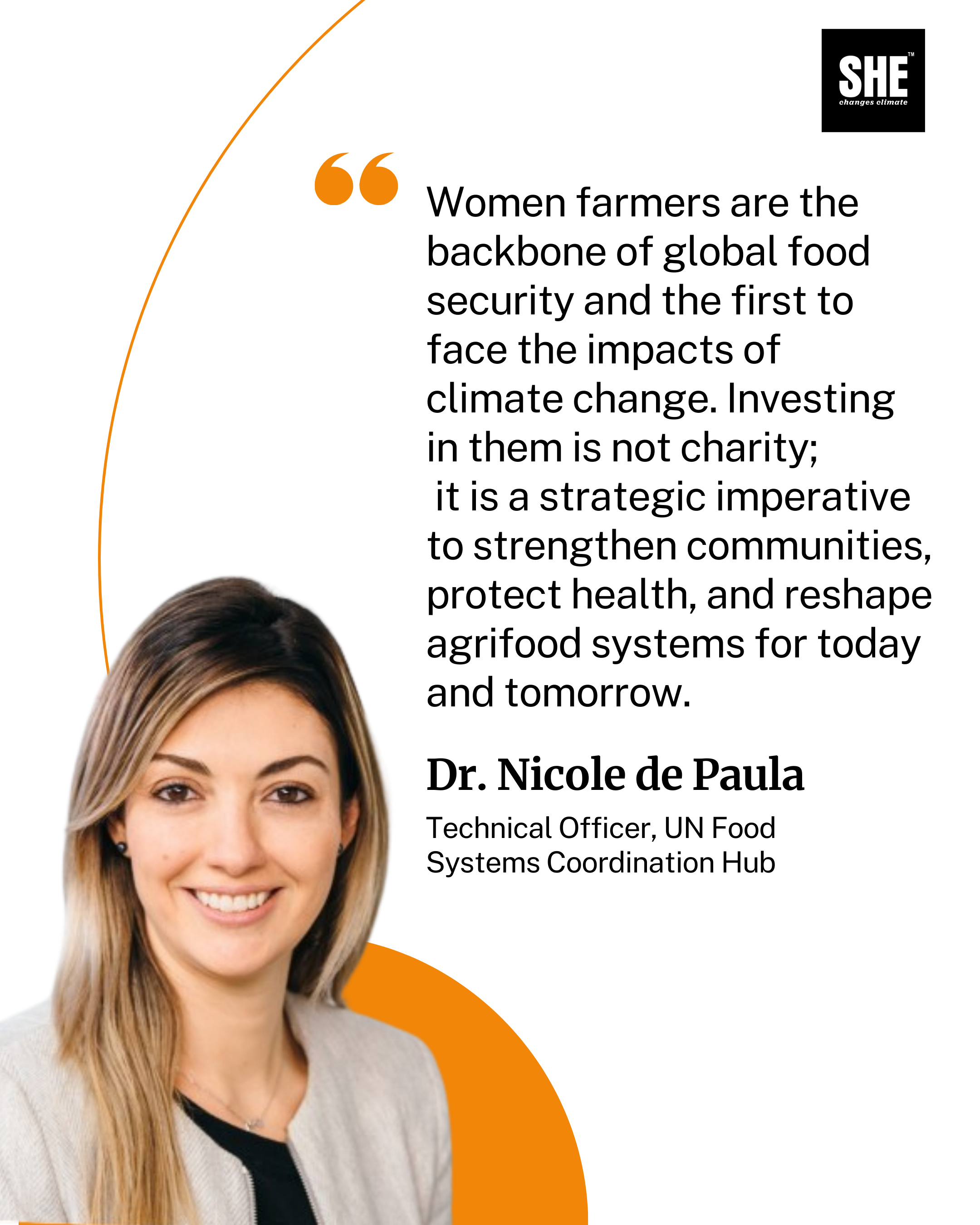
In many communities, where agriculture is the main source of food and income, climate disruptions can reduce household food availability, drive malnutrition and lead to sustained stress. As Nicole de Paula, from the UN Food Systems Coordination Hub puts it, “Women farmers are the backbone of global food security and the first to face the impacts of climate change. Investing in them is not charity; it is a strategic imperative to strengthen communities, protect health, and reshape agrifood systems for today and tomorrow.”
When disasters hit, care breaks and harm rises.
Floods, cyclones, and storms do not just damage roads and clinics. They break the pathways people rely on to reach care. They also overload health services through staff shortages, disrupted supplies, and crowded facilities, making routine and emergency care harder to deliver. In that squeeze, many women delay antenatal visits and emergency care.
Reproductive and maternal health services are among the first to be hit. Climate disasters also disrupt safe delivery, menstrual hygiene access and basic sexual and reproductive health and rights (SRHR) services.
During and after climate-related disasters, risks of gender-based violence rise. Yet SRHR remains weakly integrated into climate policy.
Climate change can amplify conditions in which violence and exploitation become more likely—displacement, poverty, breakdown of protection systems, and overcrowded temporary shelters.
Mental health: the quiet burden that keeps growing
There is rising evidence that climate change affects mental health through chronic stress, grief after loss, trauma from displacement and violence. In many settings, women have fewer resources to recover, less control over household finances, less mobility, and the pressure of caregiving that compounds during crises.
This is one reason climate-health work has to move beyond emergency response. Mental health is an essential component of resilience.
Health is rising on the climate agenda—but policy hasn’t caught up
The climate-health intersection has gained visibility in global forums. At COP28 in 2023, hosted in the United Arab Emirates (UAE), the summit held the first-ever Health Day and a climate-health ministerial meeting, marking a shift in how governments and institutions talk about climate action.
Momentum carried into COP30 in Belém, Brazil, where a Health Day convened a ministerial health plenary. COP30 also elevated the need for stronger integration of health into national planning.
But visibility is not the same as implementation.
Two policy tools matter here:
“Healthy” Nationally Determined Contributions (NDCs)—because NDCs are where countries formalise their climate commitments. They shape finance, planning, and accountability. Frameworks such as “Healthy NDCs 3.0: Embedding Health in National Climate Plans for 2035” also point to where this needs to go next—health built into national climate plans as standard, not exception.
Health National Adaptation Plans (HNAPs), vulnerability and adaptation assessments, and health systems adaptation—because you cannot protect health from climate risks without mapping vulnerabilities and strengthening the systems that deliver care. WHO emphasises vulnerability and adaptation assessments as a core instrument for decision-makers.
Despite this, the global picture is mixed. Most NDCs do refer to health and climate linkages, but the depth varies widely, and mentions do not always translate into clear plans, budgets, or delivery.
The 2023 Healthy NDC Scorecard, which assesses 58 NDCs submitted between October 2021 and September 2022, found a sharp imbalance. Some low and middle-income countries scored among the strongest on health, while several high-income countries scored zero. It also flagged a wider mismatch. Countries can acknowledge health risks while still falling short on the ambition needed to protect health.
Women’s health is still rarely explicit in these plans. Even where health is recognised, gender is often not spelt out. Climate plans therefore miss what shapes women’s risk and recovery: pregnancy, caregiving, informal work, safety, and mental health.
This is the gap the SHE Changes Climate campaign on the gendered health impacts of climate change is stepping into. Over the coming month, we go from the global picture to two country deep-dives—India and Kenya. We ask a simple question: do climate plans reflect the health realities women are living with? And are those plans being implemented? The policy window around climate plans creates a real chance to put health outcomes and the gendered inequities within them into the spine of climate action.
Why the next wave of climate planning needs a health spine and an equity lens
The world does not need another set of statements about “protecting the vulnerable.” It needs climate plans that can reduce harm in the places where harm is predictable.
A health-centred approach forces coordinated action across sectors: clean energy and air quality, safer and sustainable transport, climate-resilient housing and heat protection, sustainable food systems and nutrition, water security and disease prevention. It also strengthens the public case for climate action by connecting climate choices to everyday well-being.
It also makes one thing unavoidable: women’s experiences. If women carry the care economy, face higher risks in pregnancy and heat exposure, and are more vulnerable during disasters and displacement, then gender is not a theme. It is a reality check and a part of how public health works.
What a better approach looks like
A stronger climate-health agenda needs to:
Put women’s health on the climate policy map: Not as a “vulnerable groups” reference, but as an explicit priority. Biological vulnerabilities (including pregnancy), structural inequities, and care burdens shape who gets sick, who gets care, and who recovers.
Bring women into decision-making where climate and health choices are made. From national climate planning and health adaptation processes to financing and implementation, women’s lived experience and professional expertise must shape the design, not just the messaging.
Elevate women health leaders in global climate forums.
Platforms such as WHO’s COP health events and ministerial forums should consistently feature women health leaders, frontline practitioners, and public health voices, so global agendas and national plans reflect realities on the ground, not only technical summaries.Build climate action that protects health for everyone, while closing gendered gaps. That means designing responses that reduce risk at population level, and also directly address where women face distinct or heightened harms—from extreme heat exposure and disrupted maternal care, to safety and dignity risks during displacement and disasters.
These are not abstract goals. They are choices.
The climate crisis will keep rewriting the conditions of health. The question is whether climate policy will keep up—whether it will recognise health as a core outcome, and women’s lives and leadership as central.
That is the work ahead.