
Kelp Country: A Diver’s Mission to Restore New Zealand’s Coastal Reefs
As part of the Edges of Earth expedition, we made our way to Aotearoa (New Zealand), a place known for its rugged coastlines, a deep-rooted Indigenous culture, and some of the most committed ocean stewards we've ever met. Our stop in Wellington had a clear purpose: to get to know Nicole Miller and see her work up close.
An underwater photographer, diver, and community scientist, Nicole is the founder of Explore Your Coast—an initiative reconnecting people to the ecosystems right outside their doors. Originally from Bavaria, she’s carved out a role that fuses science, storytelling, and strategy. She helped launch Wellington’s first community-led kelp forest restoration project, worked alongside local iwi to secure special permits for urchin removal, and pioneered the use of immersive 360-degree underwater footage to bring ocean experiences to others, allowing them to see a glimpse of her underwater world from dry land.
What started as a personal outlet—diving, filming, gathering seaweed data—has grown into a far-reaching effort to restore coastlines, influence marine policy, and build the next generation of ocean advocates. Together, we dove her local sites, learned about the urchin barrens she’s fighting to reverse, and witnessed firsthand how she brings marine science into classrooms, community halls, and even to walkers along the coast through QR-activated dive footage. Her work is local, but its impact is anything but. Nicole represents a new kind of explorer—one who doesn’t just document the edges, but actively protects them.
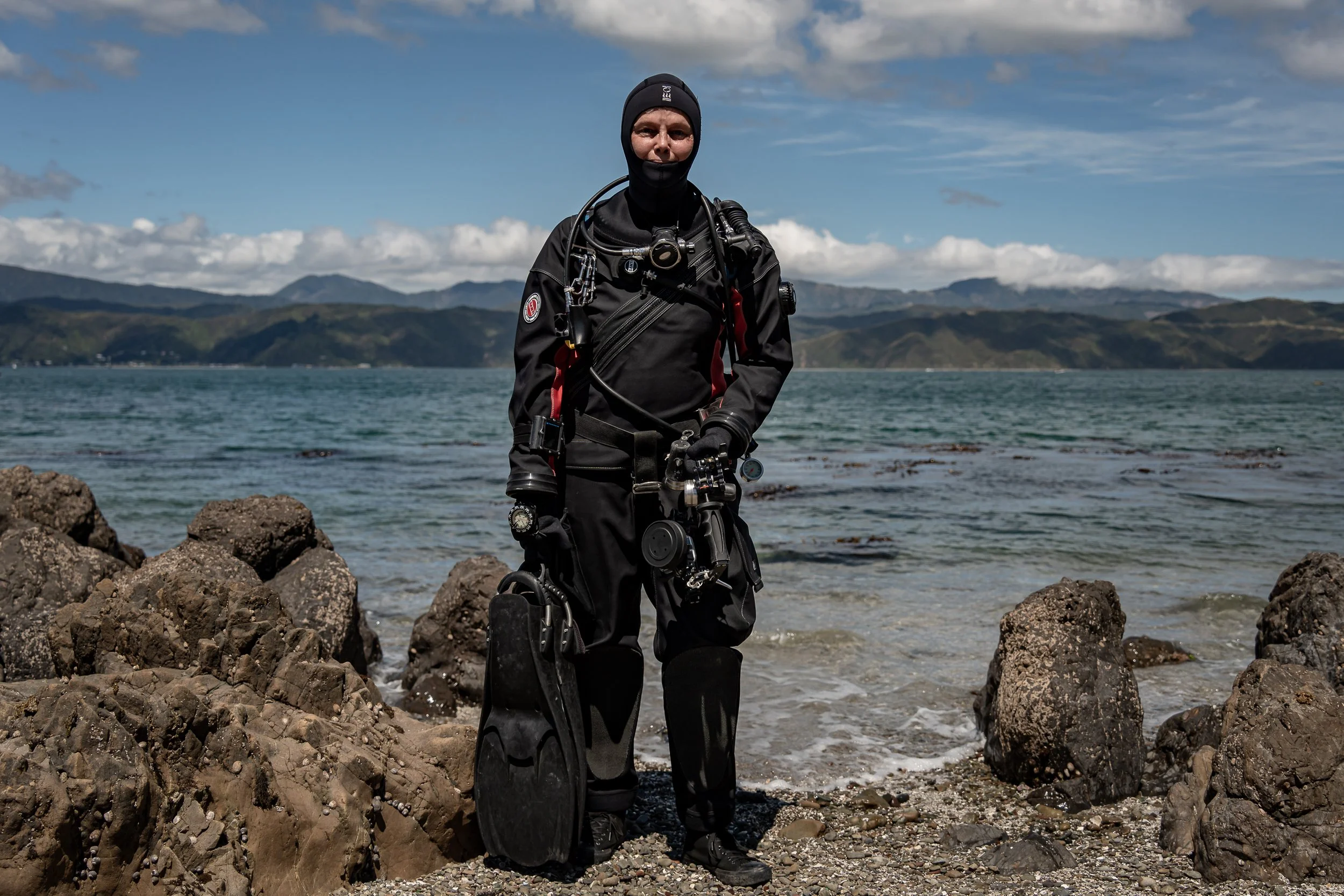
(Nicole Miller suiting up for a dive off the coast of Wellington, NZ. Photo Credit: Adam Moore)
Andi: Nicole, I’ve been looking forward to this since we were first introduced through the Marine Conservation Institute. You’ve definitely built a bit of a reputation around here and are quite the legend!
Nicole: Ha, thank you—but I’m far from it. You know what is legendary though? Our kelp forests. Right here around Wellington, and all across Aotearoa, we’ve got incredible temperate reef systems. We’re actually at the northern boundary for giant kelp, and you can see it growing just offshore. These underwater forests are mazes, full of movement, and full of life.
It surprises people that in a place so close to the city, we still have this kind of biodiversity. But we do. And while I’ve spent years falling in love with it, I’ve also witnessed its slow decline. But that’s what keeps pushing me to act. I started collecting data with help from a whole community of volunteers, and that work ended up sparking the first kelp restoration project here in Wellington.
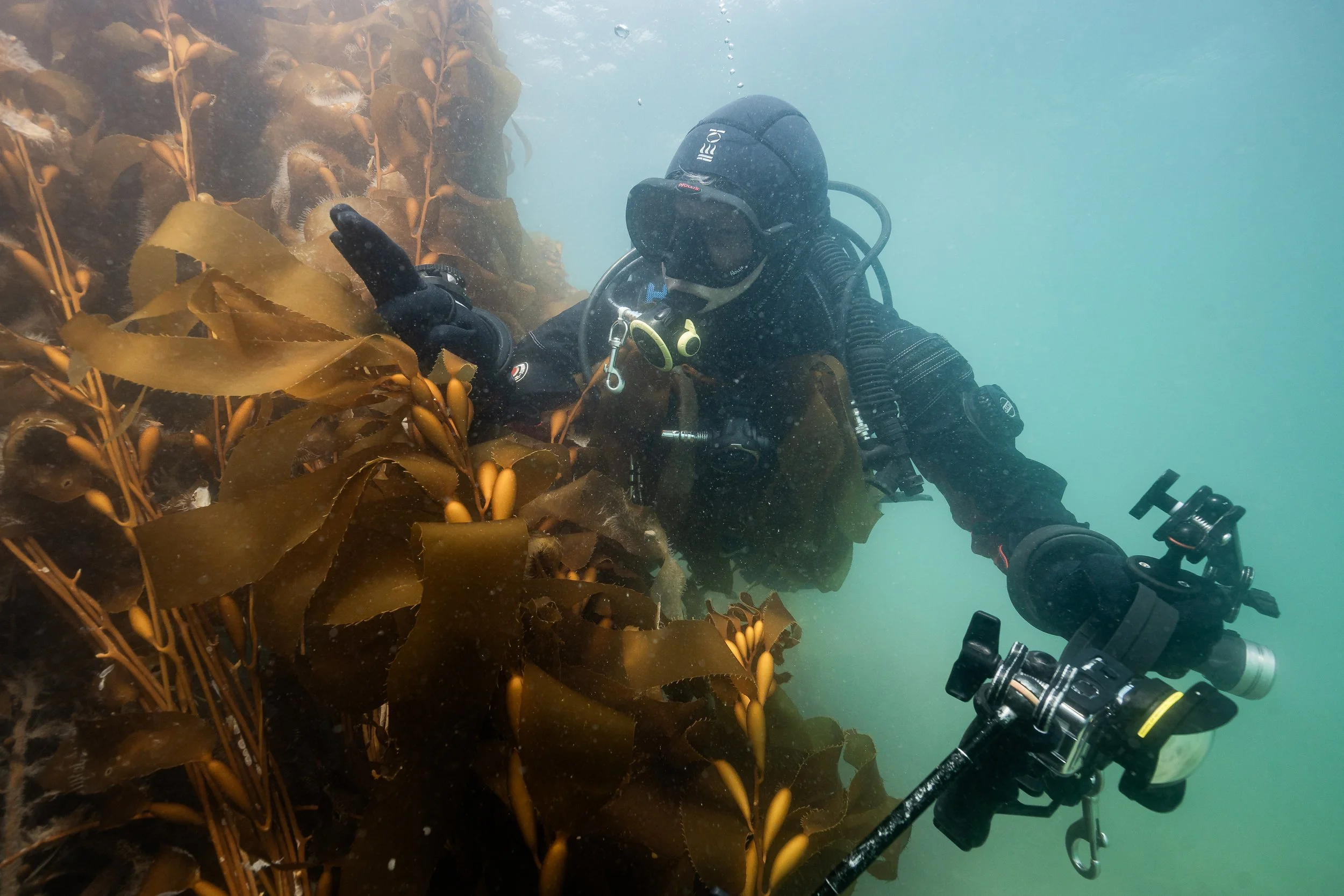
(The giant kelp forest of Wellington, up close. Photo Credit: Adam Moore)
Andi: Let’s take a step back. How did you end up here, and how did kelp become such a central part of your world?
Nicole: I’ve been ocean-obsessed since I was a kid growing up in landlocked Bavaria. And back then, moving to New Zealand wasn’t exactly the plan. I was applying for postdocs all over, and NZ just happened to come through first. I’d never been there before, but the idea that you could snowboard and dive in the same day had me sold.
My background is in organic chemistry, which brought me to the University of Auckland. Later, I worked in public sector innovation and strategy. But through all of that, I was diving every chance I got. My first open water dive was at Poor Knights Islands, where we were circled by three bronze whaler sharks. My instructor tried to wave them off, but I thought it was the coolest thing. That moment, with a disposable camera in hand, sparked everything.
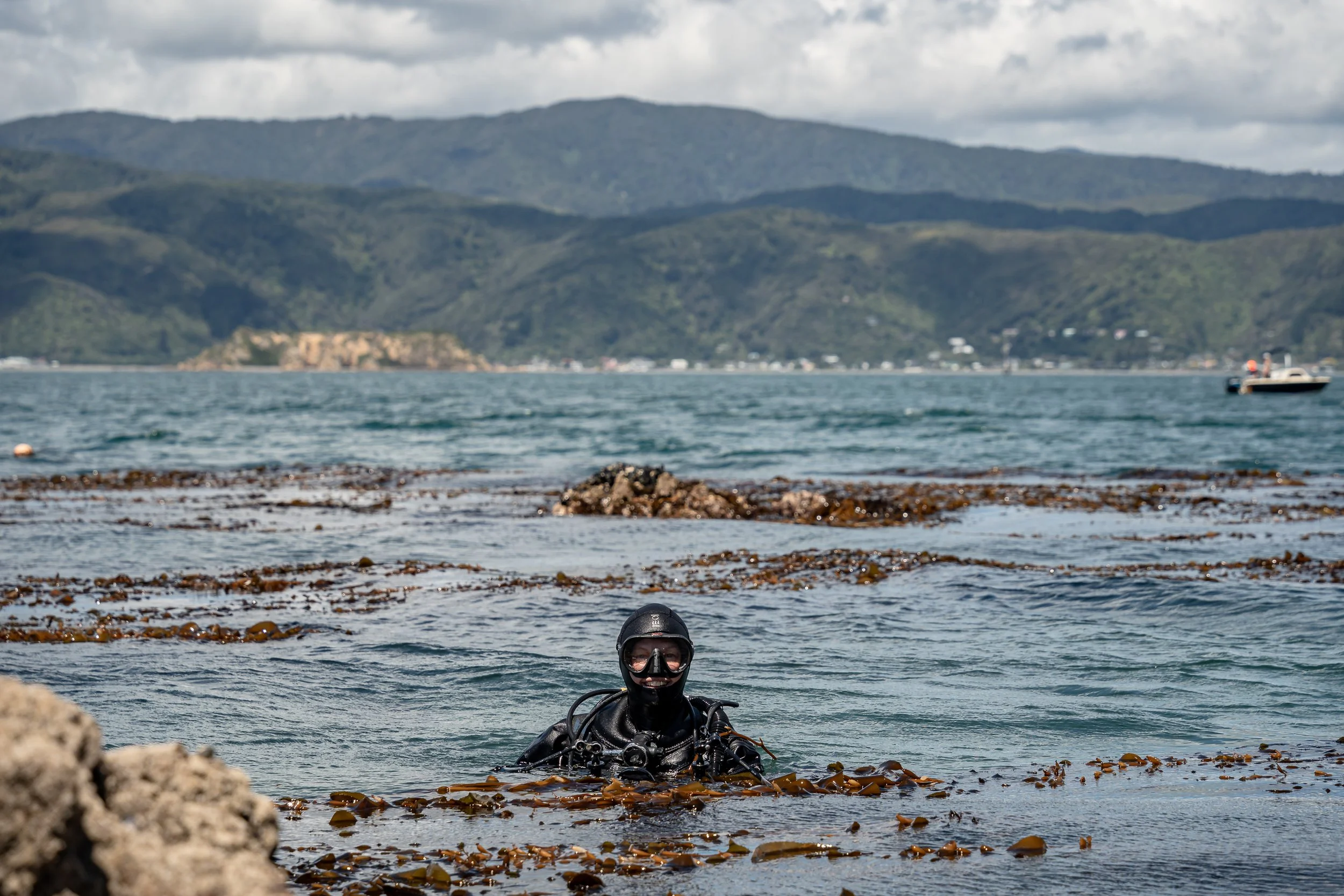
(Nicole is surrounded by giant kelp off the coast of Wellington, NZ. Photo Credit: Adam Moore)
Diving led to photography, then species ID, then broader ecosystem observation. When I moved to Wellington, the marine reserve here blew my mind. Giant kelp forests in my backyard? I couldn’t stay away. I started documenting changes in 2016 and quickly noticed how much of the kelp we were losing due to the rise in urchin populations. I brought that to our local iwi, Taranaki Whānui, and together we secured the first special permit for an iwi-led and community-supported urchin removal project in New Zealand.
In Aotearoa New Zealand, an iwi is a Māori tribal group, often serving as a key guardian of ancestral lands and waters, those typically with deep cultural, historical, and environmental ties to the region. This relationship kicked off Wellington’s first larger scale kelp restoration effort and is a case study for more projects to come. I didn’t go looking for kelp. But once I found it, everything changed.
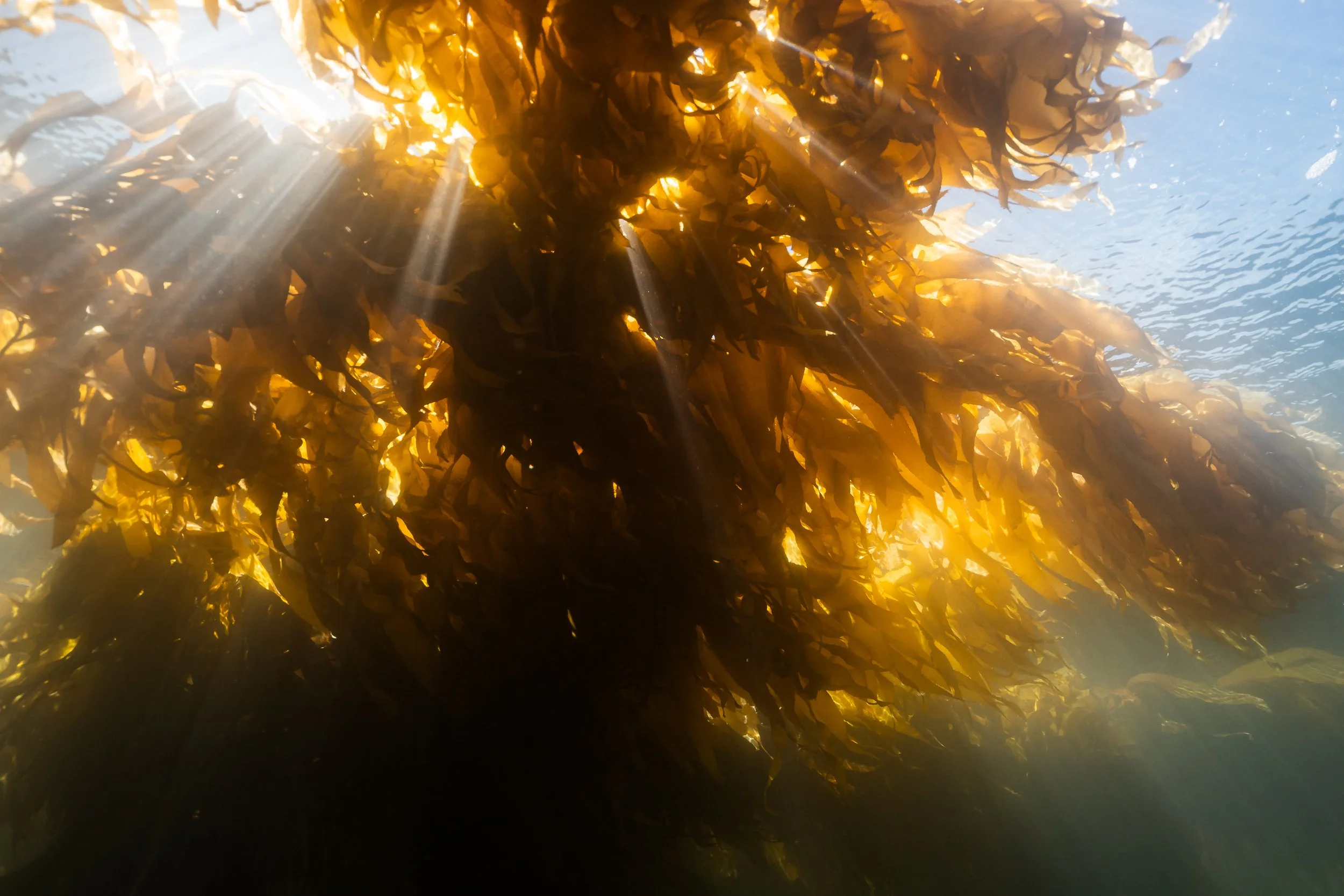
(Sunbeams shining through healthy giant kelp. Photo Credit: Andi Cross)
Andi: There aren’t many places left with thriving kelp forests. Why are they so important, and what are they up against?
Nicole: They’re foundational. Like rainforests of the sea. Kelp forests provide food, shelter, and breeding grounds for countless species. You’ve got fish weaving through the blades, sponges clinging to holdfasts—it’s a buzzing, layered ecosystem. But they’re fragile. Warming oceans, overfishing, sedimentation, and pollution have caused declines globally. It’s no different here. We’re seeing those same pressures chip away at the resilience of local ecosystems.
Andi: What’s New Zealand’s relationship with marine protection like?
Nicole: It’s complicated. On one hand, New Zealand was the first country to create a fully protected marine reserve called Goat Island back in the ’70s. Scientists pushed for it because they needed a control site to study an untouched ecosystem. That inspired the Marine Reserve Act and led to other reserves being created, including Taputeranga Marine Reserve here in Wellington.
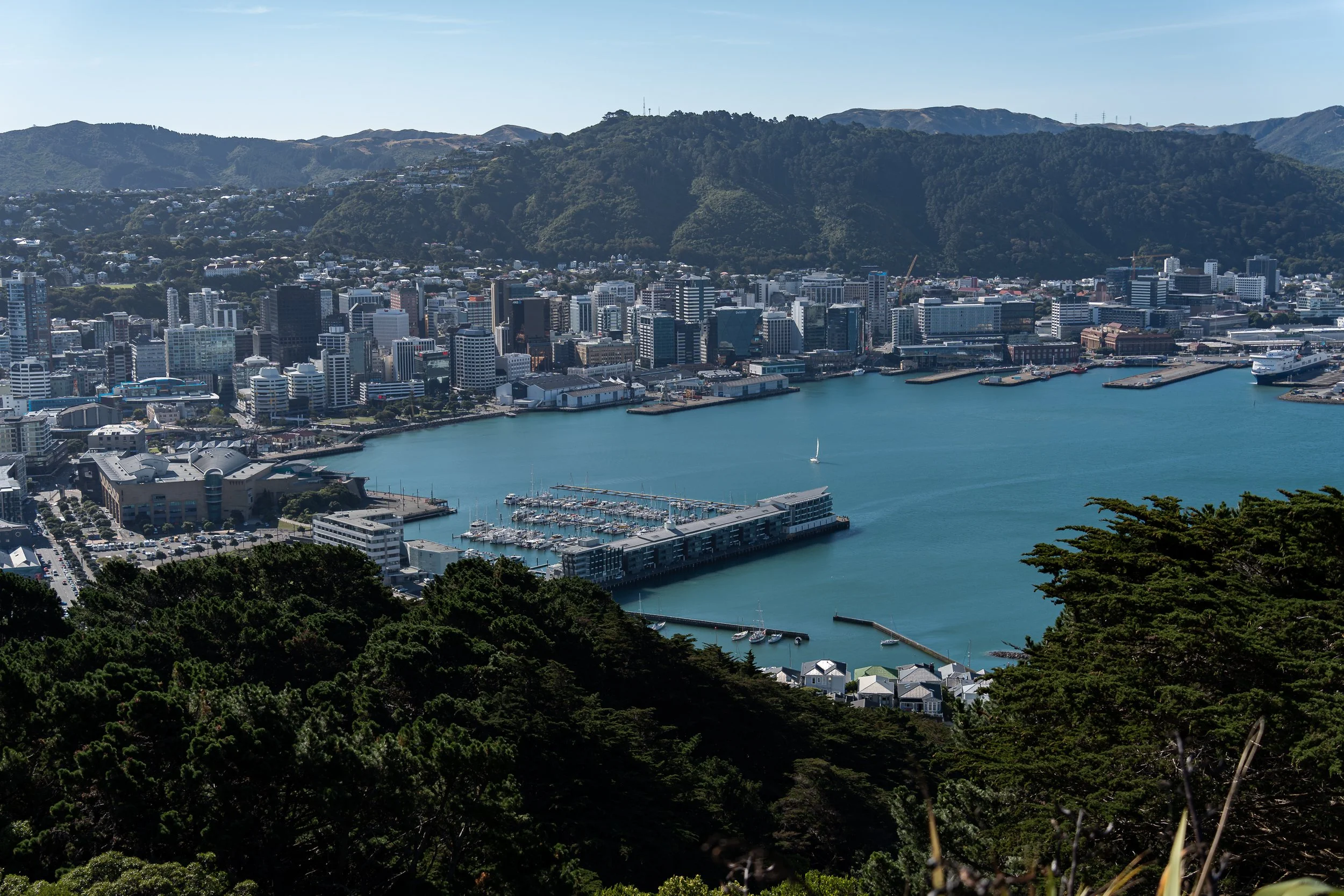
(The city of Wellington, NZ. Photo Credit: Adam Moore)
But getting Taputeranga Marine Reserve across the line took 17 years. Advocates faced serious opposition, even death threats. Eventually, the evidence won out—people saw species return, fish populations rebound, and even better fishing just outside the boundary. But protection here is still minimal. Only about 0.5% of our Exclusive Economic Zone is fully protected. On land, we’re closer to 30%. So it’s a huge gap.
Part of the problem is we don’t ask the right questions. We base decisions on what’s left, not what used to be here, or what could come back. We forget what “healthy” even looks like. Kids now get excited about seeing a few small fish, but a generation ago it was crayfish, big snapper, and thriving kelp. That’s why these local restoration efforts matter so much. They remind us of what’s possible. And with Indigenous knowledge, community science, and better policy alignment, we can start restoring some of what’s been lost.
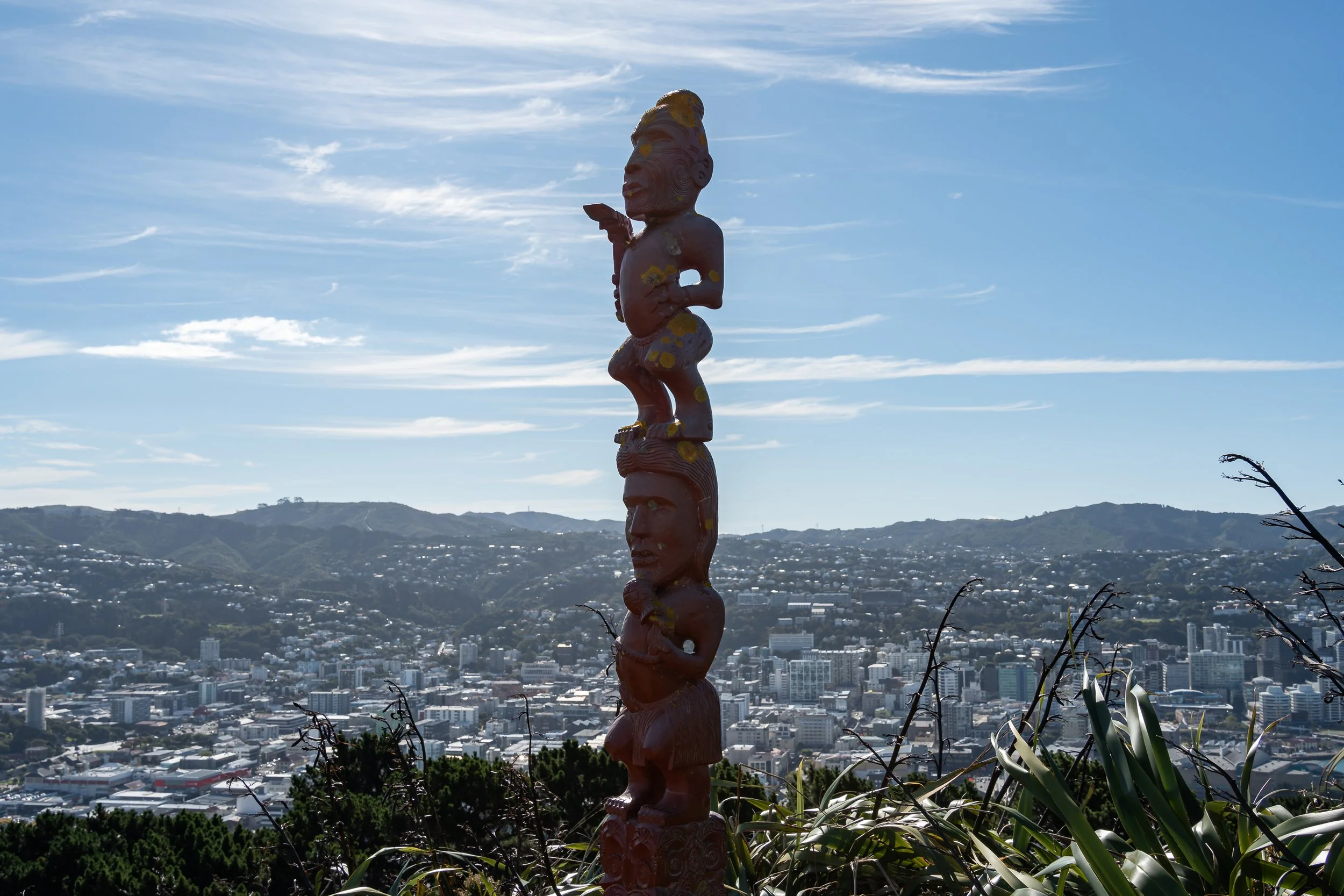
(Indigenous knowledge is critical in protecting natural resources. Photo Credit: Adam Moore)
Andi: It’s clear how much you care, but what’s equally impressive is how you’ve brought people into the fold. How did that part of your work evolve?
Nicole: It started with me diving A LOT, especially in the marine reserve. I began documenting what I saw and connected with the Taputeranga Marine Reserve Trust. I had content I thought might be useful, and as it turns out, it definitely was. That snowballed into further collaboration. Scientists, divers, conservationists—we began sharing what we knew, and I gradually became this hub of lived experience and observation. Eventually, I joined the Trust as a board member. From there, it became clear we needed to help others connect too.
So, I started experimenting with 360-degree cameras. When the consumer tech got good enough, I created immersive underwater videos and got VR headsets. We now take them into schools, libraries, and community meetings. It’s powerful, as people are shocked by what’s just along the coastline of this city. Fish darting through kelp, colorful reefs right in the harbor. It challenges their assumptions and builds curiosity. And that’s the goal: build connection, spark interest, and hopefully grow the number of people who care enough to act.
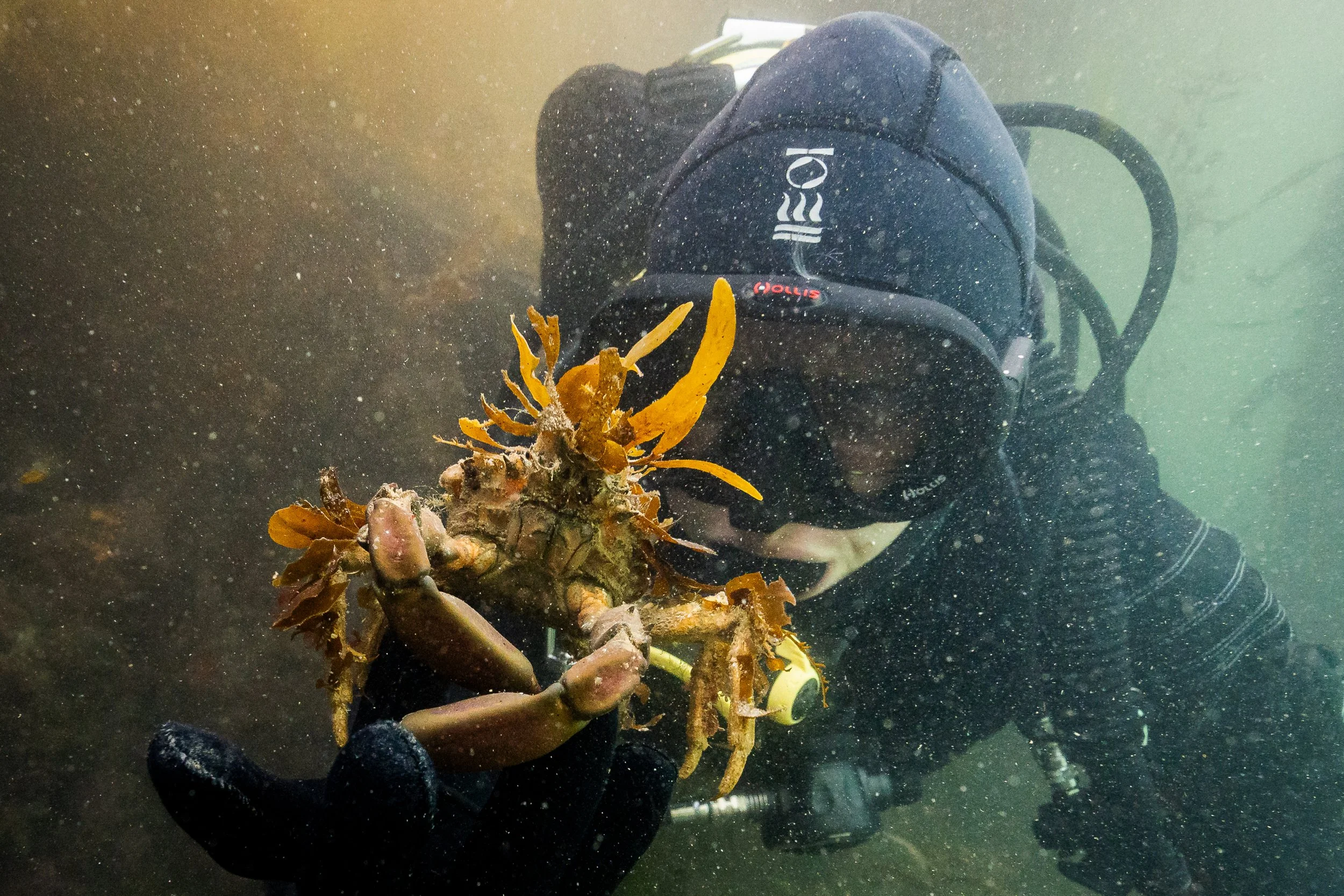
(Camouflage crab found off the coast of Wellington, NZ. Photo Credit: Andi Cross)
Andi: Let’s talk about the kelp restoration work. What triggered that effort, and how did it take shape?
Nicole: I was diving at the same spot regularly, and one day, I came back to find it barren. Just months before, it had been a thriving kelp forest. Now it was stripped—no kelp, no life. That’s what we call an urchin barren. In New Zealand, different fish species like snapper and blue cod, and crayfish (rock lobster) predate on urchin. Unfortunately, those species are excellent seafood species. If we take too many of these urchin predators from our reefs, the urchin starts to take over and graze down everything.
That was my turning point. I mapped the area with GPS and photos, and brought the data to Taranaki Whānui. We discussed a pilot project to remove urchins in a way that would be done respectfully, not through culling. And with that, they were on board.
Over six dives, iwi and community volunteers removed more than 12,000 urchins—and nothing went to waste. Some were shared as kai (seafood) with the iwi, others were used as natural fertilizer, and a portion even went toward ceremonial purposes. The local dive shop took the lead on health and safety, while I mapped the collection zones and coordinated the effort. We also launched a “10-minute urchin count”—a simple, low-barrier way for recreational divers to gather data without needing scientific training. That mix of community science, cultural respect, and hands-on action has been a game-changer.
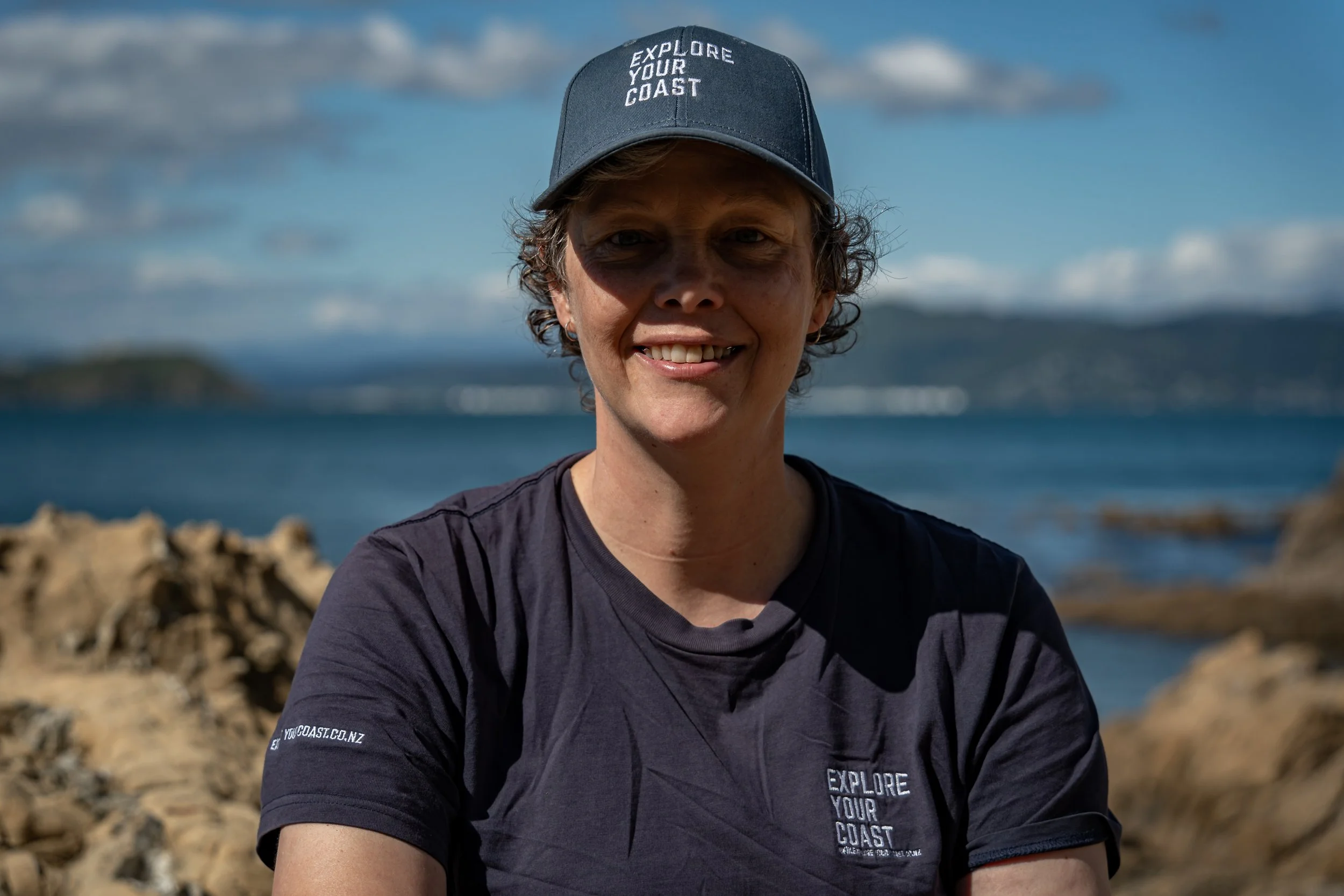
(Nicole Miller post dive sharing her story with the Edges of Earth expedition team. Photo Credit: Adam Moore)
And the result? Kelp is coming back, as well as pāua (abalone), crayfish, baitfish. Seabirds are feeding again. It’s incredible to see recovery happening with our own eyes in just a matter of months.
Andi: Is it just the urchins? Or are there other pressures contributing to kelp decline?
Nicole: Urchins are a key driver, but they’re part of a larger story. Overfishing has disrupted the food web. Predators are gone, which means urchins thrive. In Wellington Harbour, legal-size crayfish are practically nonexistent. People don’t always see it. They fish or swim and assume all’s fine. But from shore, on a calm day, you can see the barren patches. You just have to know what you’re looking at.
That’s why early action matters. If the kelp is completely gone, restoration gets significantly harder. But if we intervene in time—like we did—nature rebounds fast. I’ve now documented 44 of Wellington’s 70-kilometer coastline using a scooter-mounted camera. Over 60% of what I saw around the inner harbor was already barren. That kind of visual record helps fill a big data gap.
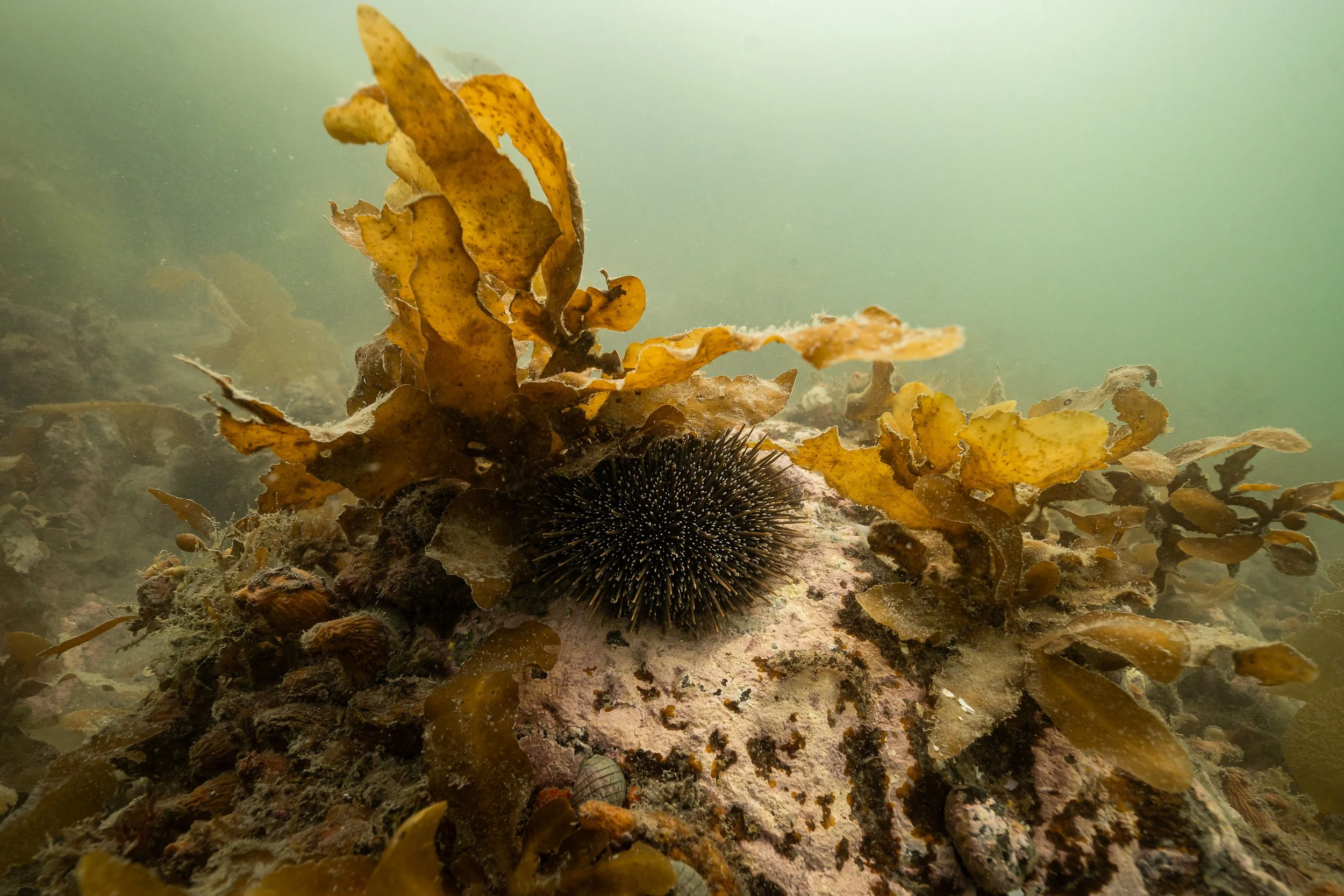
(There must be a balance of urchin and kelp in order for the ecosystem to thrive. Photo Credit: Andi Cross)
Andi: You’re helping bring visibility to something most people never see.
Nicole: Exactly. No one had mapped these shallow reefs before. With this data, I’ve contributed to council submissions, pointed out gaps in environmental reports, and helped push for more informed decisions. That’s also what inspired Explore Your Coast. It’s about connecting more New Zealanders to the ocean—through hands-on experience and simple data collection. You don’t need high-tech gear. A GoPro and a GPS is enough to start. We want to empower iwi and communities with tools to understand and protect what’s right outside their door.
Andi: So what’s next—for you, for Wellington, for kelp?
Nicole: It depends on whether people are willing to look below the surface. If I weren’t diving and documenting, most of these stories wouldn’t be told. People love our coastlines—but they don’t always realize what’s vanishing just offshore.
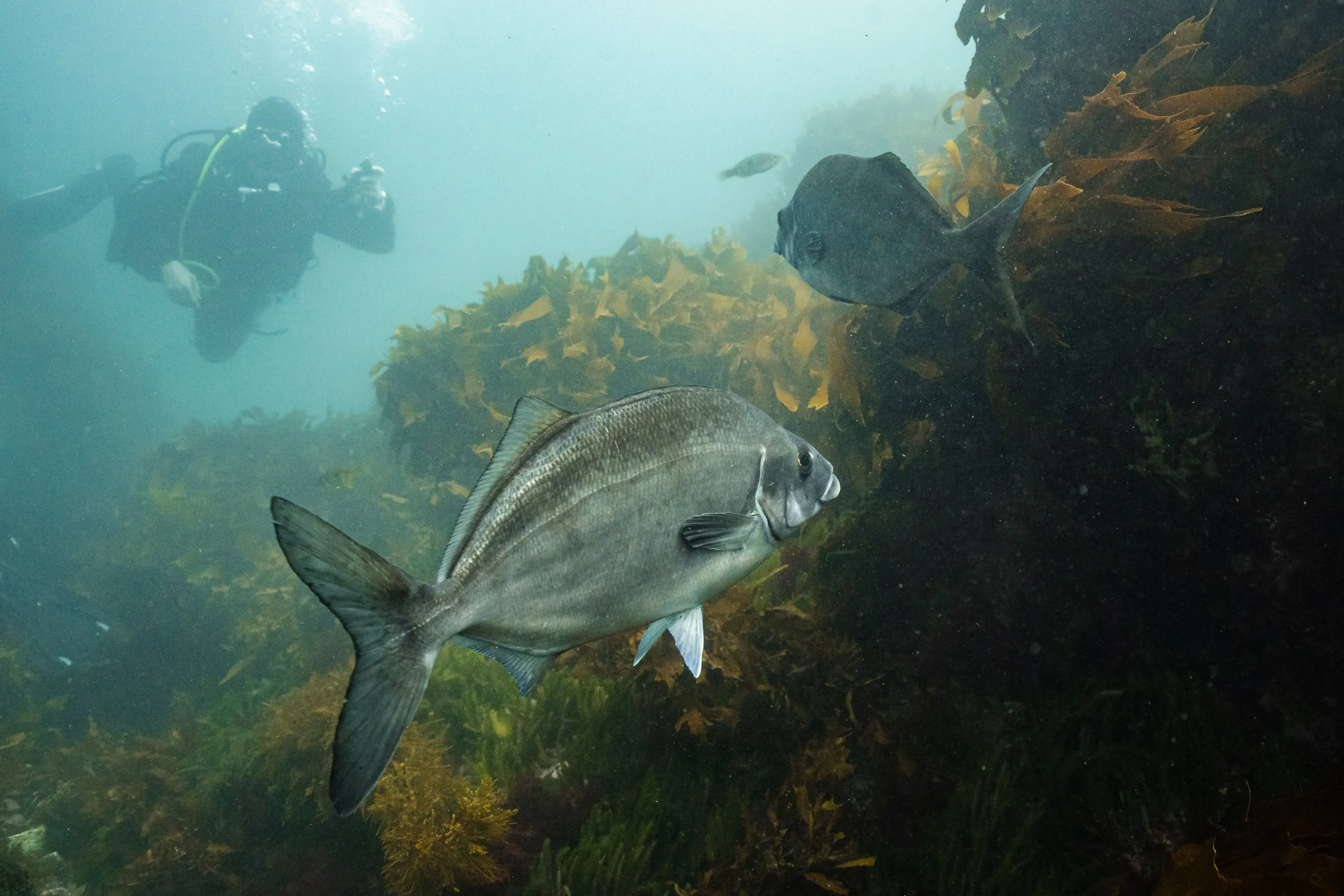
(Healthy kelp forests means more fish life. Photo Credit: Adam Moore)
New Zealand is surrounded by the ocean. Most people live within 10 kilometers of the coast. But very few have a real relationship with what’s underwater. That’s what I want to change. Through tech, data, storytelling, and direct experience, we can create that connection. This work is not about pointing fingers. What we need to do is show people what’s possible when we pay attention and take care.
Our kelp restoration project is just one example. It started with citizen science, grew into a Iwi-led and community-supported initiative, and now serves as a case study for others. We gathered the data, shared it with decision-makers, and now real change is happening. We just finished a short documentary about the beauty and plight of Wellington’s underwater forests and we are bringing it to screens around New Zealand to inspire change. Long-term, I want to see people talk about kelp like they do native birds or forests. Understand that when you lose a kelp forest, you lose a nursery, a carbon sink, a water filter. An entire ecosystem.
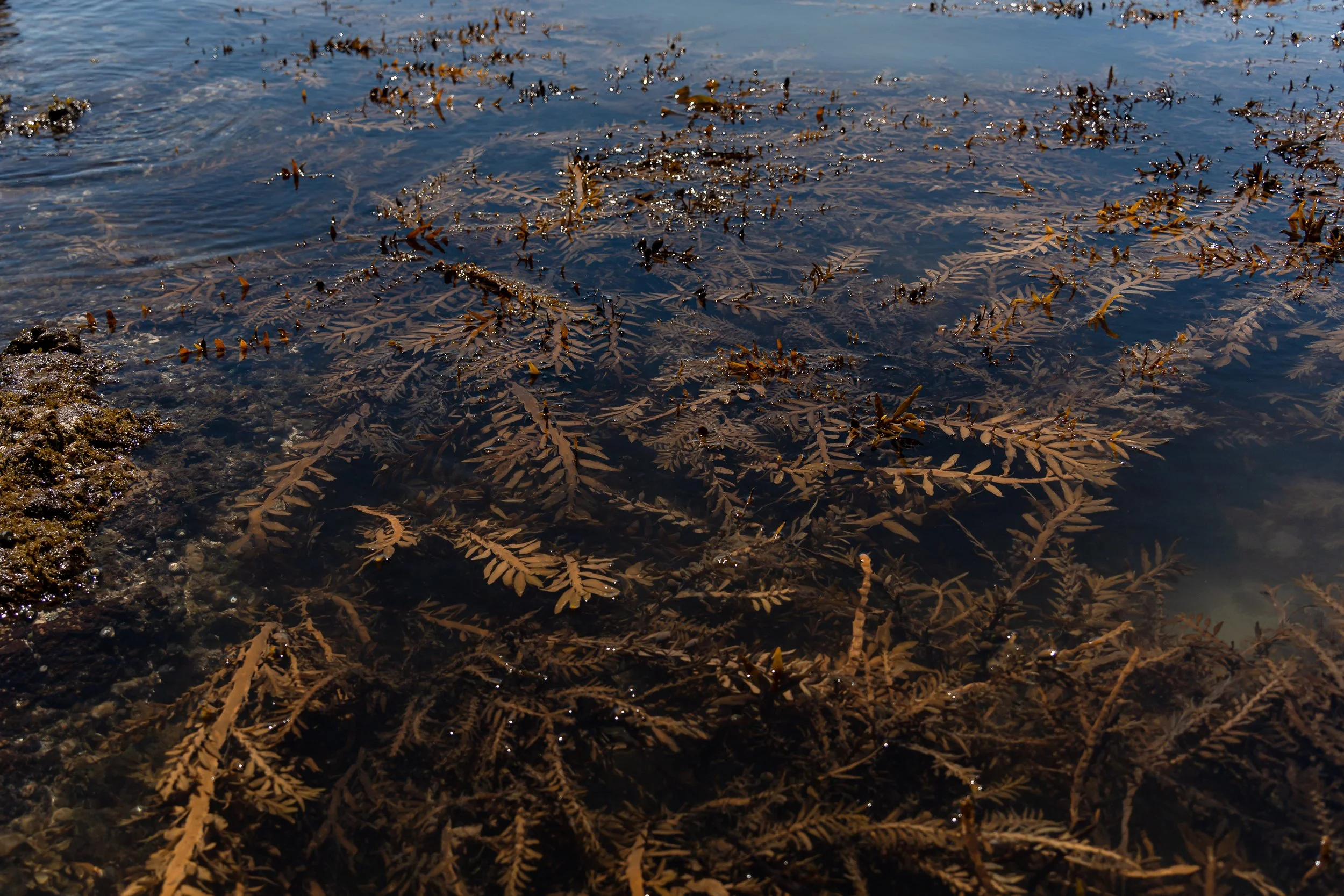
(What you can see from the shoreline in Wellington, NZ. Photo Credit: Adam Moore)
If this kind of loss was happening on land, there’d be public outcry. But underwater, it can remain hidden much more easily. That’s why I keep diving, keep filming, and keep speaking up. If we act, the ocean can recover in a short period of time. We just need more people to decide it’s worth it.
___
As Told To: Andi Cross | Photography By: Adam Moore and Andi Cross | Support From: Explore Your Coast
___
SHE Changes Climate collaborates with the Edges of Earth Expedition, a woman-led team dedicated to highlighting impactful stories from the environmental frontlines. This partnership focuses on amplifying the voices of women who are pioneering positive change in some of the world’s most vulnerable coastal and marine environments, many of whose stories have gone untold.